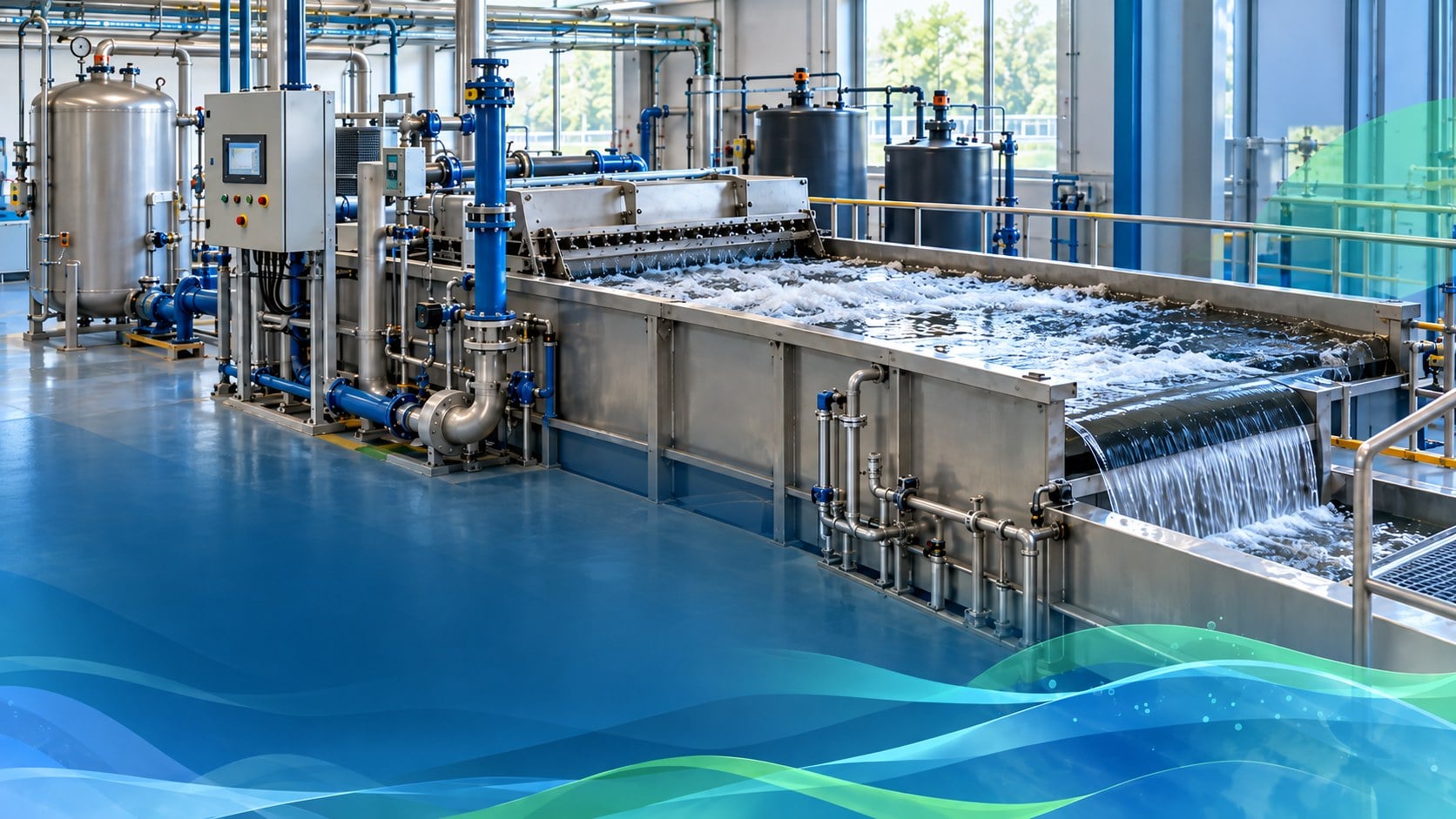
Wastewater doesn't have to be complicated. One of the best ways to become more comfortable around a wastewater system is to understand one basic question: where does the water go?
Follow the Water is the first issue of Field Fundamentals, a monthly WSI Water series on how laundry wastewater systems work and what to look for when you walk one.
The process at a glance
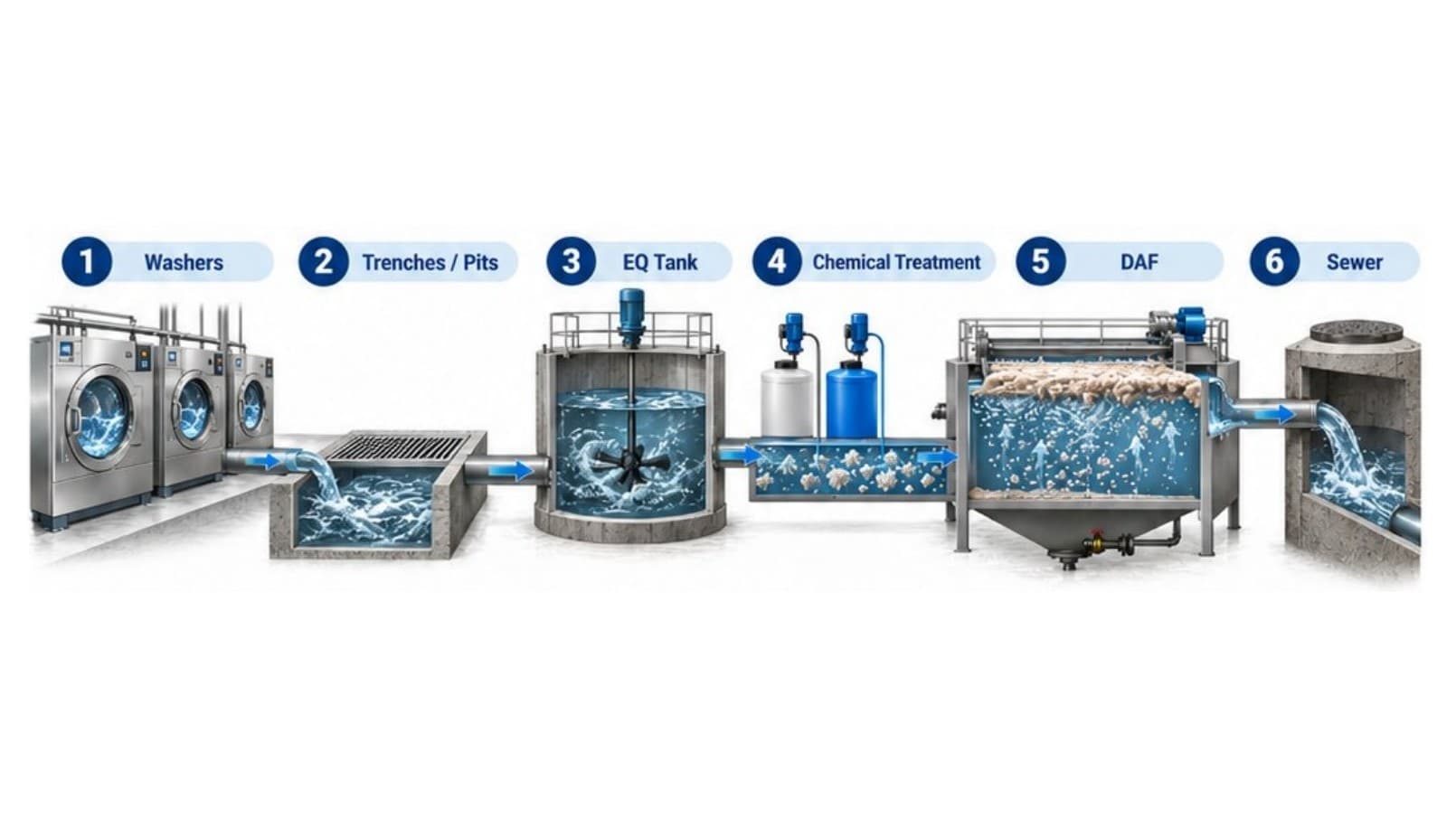
On its way from the washers to the sewer, water moves through six stages:
- Washers
- Trenches and pits
- EQ tank
- Chemical treatment
- DAF
- Sewer
Start at the washfloor
Wastewater treatment begins before the water ever reaches the wastewater room. Water leaving the washers may contain detergent, oil and grease, dirt, food soils, lint, dyes, metals, suspended solids and dissolved organic material. Different accounts can create very different wastewater.
Pits and trenches
Pits collect wastewater and move it toward treatment. Look for heavy solids, excessive lint, oil layers, strong odors, plugged screens, pumps that are not operating properly, or large slugs of concentrated waste.
The EQ tank
The equalization (EQ) tank blends wastewater from different parts of the day. Its job is to make the water entering treatment more consistent. A good EQ tank should generally be well mixed, relatively uniform, and free of large settled deposits or excessive floating grease.
Chemical treatment and DAF
Treatment chemicals help tiny particles come together into larger particles called floc. The DAF (dissolved air flotation) unit then uses tiny air bubbles to float that floc to the surface, so sludge can be removed and cleaner water can leave underneath.
Field tip: If wastewater treatment suddenly changes, ask, "Did anything change on the washfloor?" A new account, an unusual load, a large rewash, a chemistry change or a concentrated product dump may affect the wastewater system.
A five-point field check
Use this the next time you walk your system:
- Look at the EQ tank. Is it mixed?
- Look at the DAF inlet. Is floc forming?
- Look at the sludge blanket. Does it appear stable?
- Look at the clarified water. Is it relatively clear?
- Look at the chemical pumps. Are they actually feeding?
Term of the month: flocculation
Flocculation is the process of bringing small particles together to make larger particles called floc. Think of making a snowball: individual flakes are difficult to pick up, but packed together they become much easier to remove.
One thing to remember
Don't immediately change chemical settings when something looks wrong. First determine what changed. The chemistry may be the problem, or it may simply be reacting to another problem.
Observe, verify, document
- Observe: look before adjusting.
- Verify: confirm pumps, pH and process conditions.
- Document: take notes, readings and photos when useful.
Next month
Issue 02 covers the equalization tank, the most overlooked part of the system.
Questions about your own wastewater system? Talk to your WSI representative, or see WSI's wastewater solutions.


