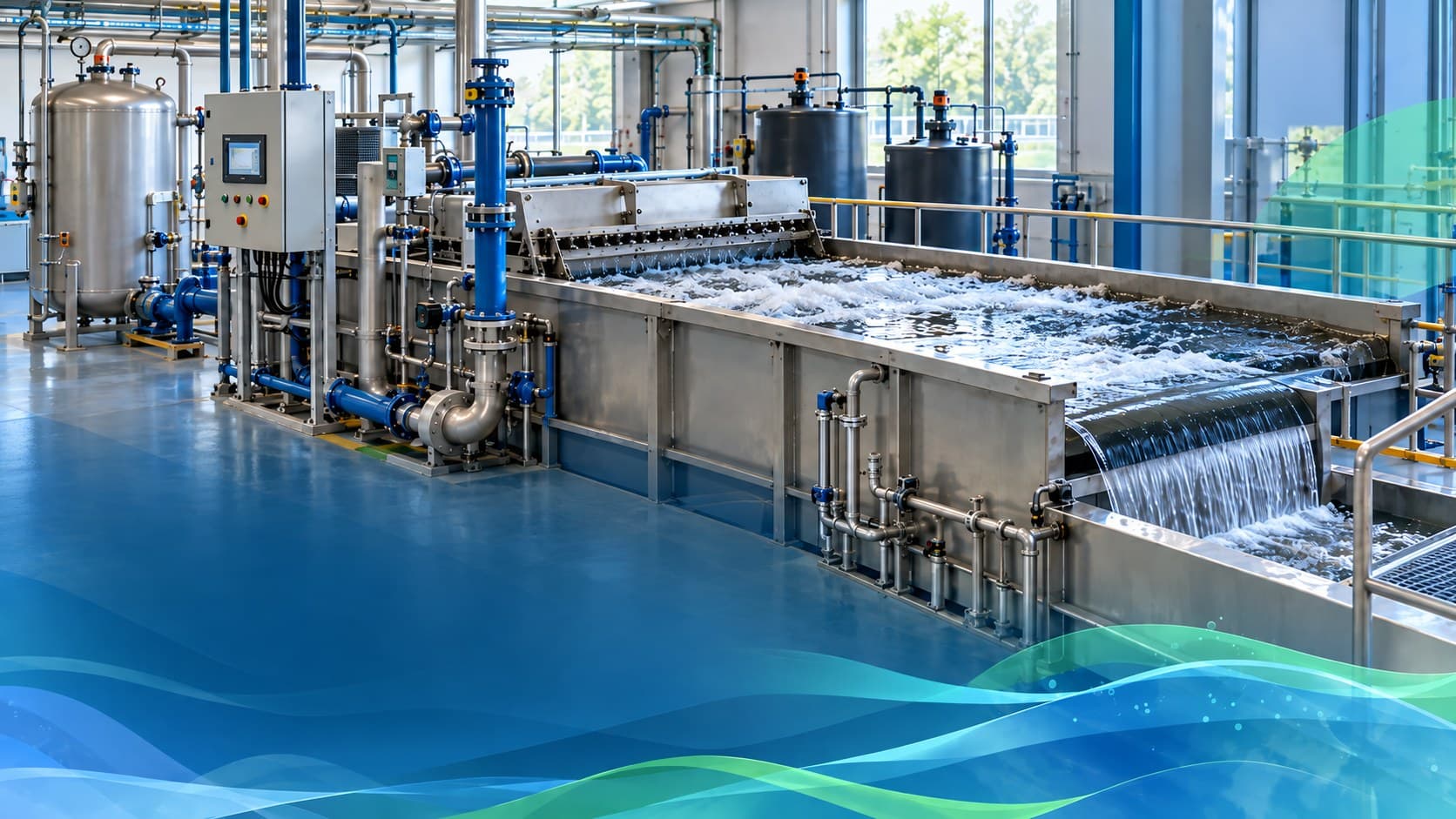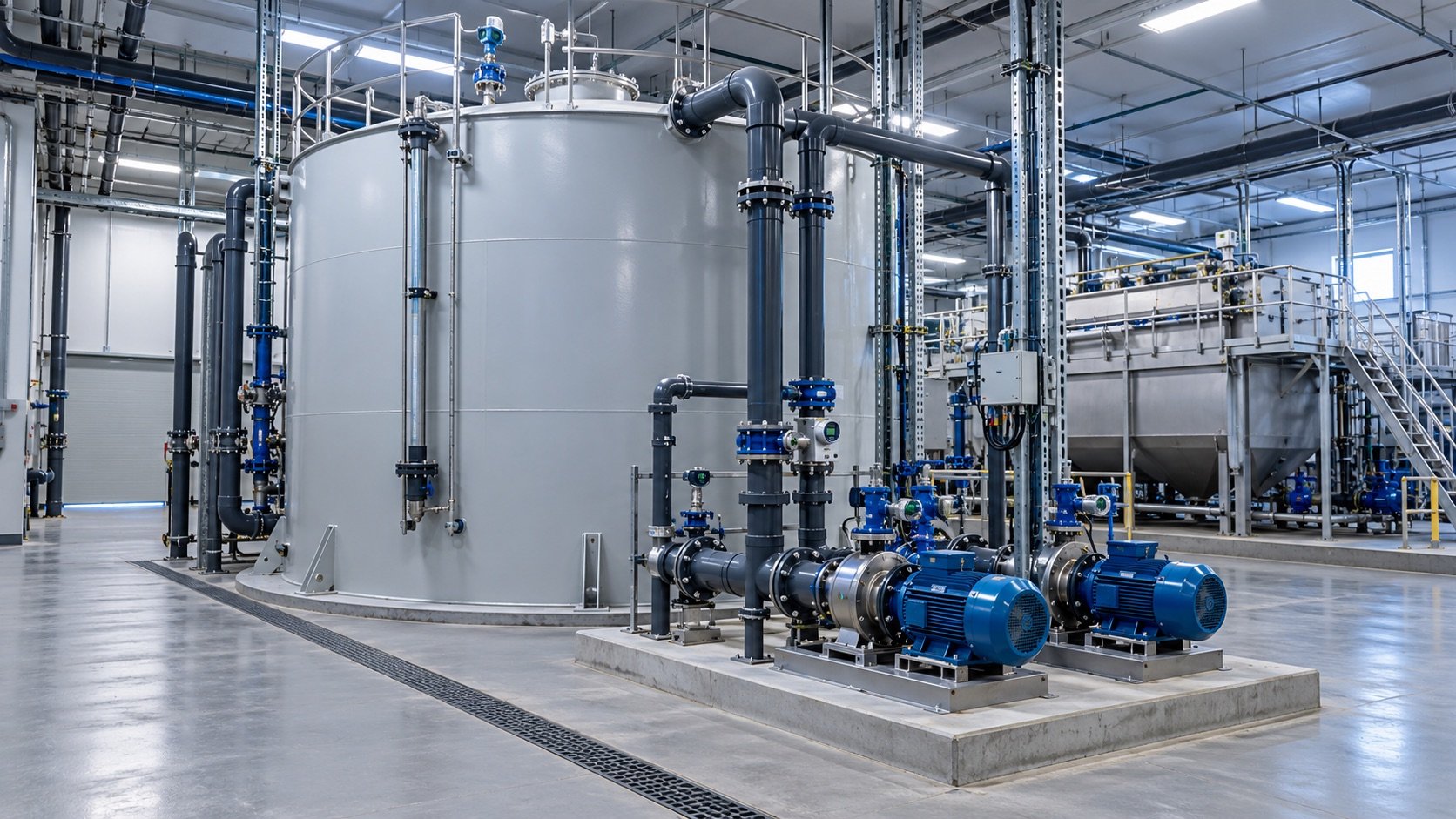
Laundry wastewater can change significantly throughout a shift. An equalization (EQ) tank buffers those changes, helping deliver a steadier feed to chemical treatment and the DAF. A good DAF needs consistent water.
The Equalization Tank is the second issue of Field Fundamentals, a monthly WSI Water series on how laundry wastewater systems work and what to look for when you walk one.
Where the EQ tank sits
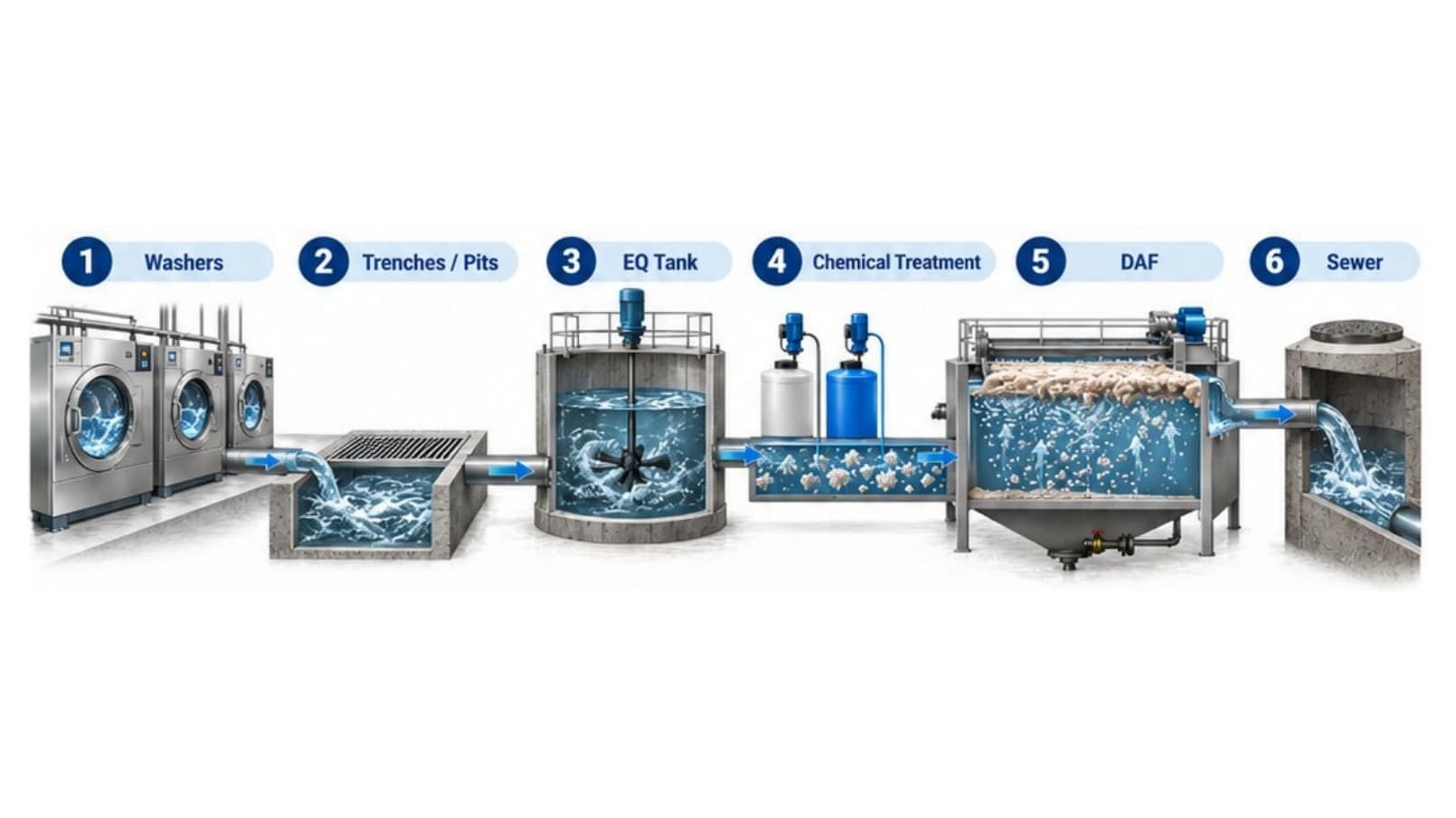
The EQ tank is the third of six stages between the washers and the sewer. It sits after the trenches and pits, and before chemical treatment and the DAF.
What does EQ mean?
EQ means equalization. The tank buffers changes in flow and wastewater strength between the washfloor and treatment, instead of passing every sudden load change straight to the DAF.
Why mixing still matters
Inside an EQ tank, inadequate mixing can allow solids buildup or uneven wastewater strength. Poor mixing can create an environment that is perfect for anaerobic bacteria growth, which can cause a tank to go septic.
What good looks like
A healthy EQ tank shows steady EQ discharge and DAF feed, normal pump and aeration operation, and stable tank-wall temperatures compared with prior visits.
Red flags
Watch for varying temperature bands along the tank wall, pump or level problems, unusual odors, or sudden pH, flow or DAF performance changes. Investigate before changing chemicals.
Field tip: Where safely accessible, compare exterior wall temperatures at several heights and around the tank. A distinct temperature band can suggest sludge buildup, but does not prove it.
Field check: use this on your next visit
- Safely feel or measure wall temperature at accessible points and heights.
- Compare similar elevations around the tank, and note any new temperature bands.
- Verify aeration or mixer equipment, levels and transfer pumps.
- Compare EQ outlet pH, flow and DAF feed conditions with prior visits.
- Record findings, and flag suspected buildup for planned tank maintenance.
Term of the month: equalization
Equalization is blending and buffering wastewater to reduce swings in flow, pH and contaminant loading before downstream treatment. Variable wastewater goes in; a more consistent feed comes out.
One thing to remember
The inside of most EQ tanks cannot be viewed during routine service. Wall-temperature patterns and process trends are clues. Manway inspection, where available, is generally done during planned drained-tank maintenance by authorized personnel.
Observe, verify, document
- Observe: look before adjusting.
- Verify: confirm pumps, pH and process conditions.
- Document: take notes, readings and photos when useful.
Next month
Issue 03 covers DAF basics: what good treatment looks like.
Questions about your own wastewater system? Talk to your WSI representative, or see WSI's wastewater solutions.